
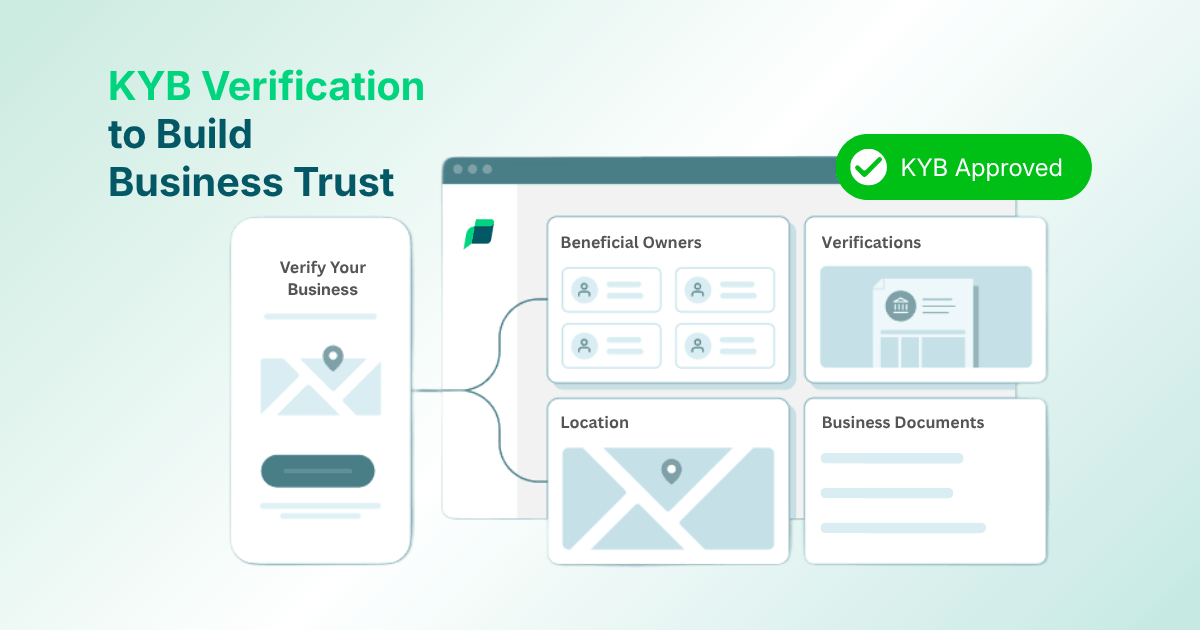
What Does “Know Your Business” Mean for Businesses?
In simple terms, KYB is a process used by a business to ensure the authenticity of other businesses. The different steps to help you in this regard are a collection of factual sources and verification of business details.As part of creating a trusted and qualified business interaction model with legitimate support, KYB services can be a boon to the industry. The need to include KYB checks is on the rise and could be identified with shifting risk levels in an organization.
The Working Model of KYB
The verification of KYB can be systematically done for businesses with the help of top-notch parameter checks. The major steps in this procedure are:
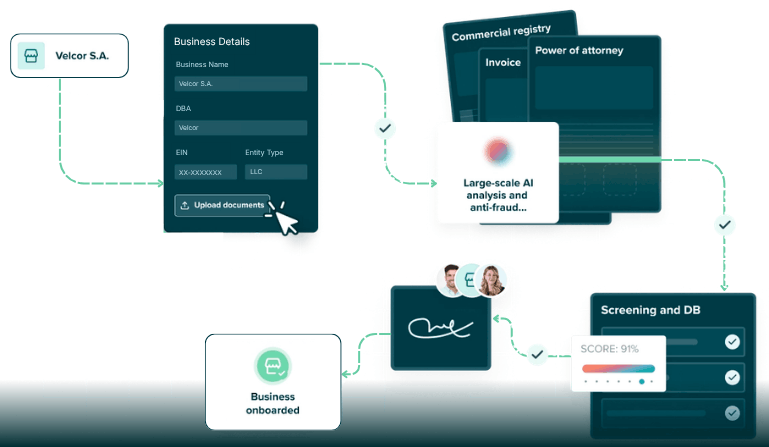
- Collection of data – As part of the KYB process, the first step is to collect the data and details. It should be followed by quality documentation and a database management model.
- Reviewing data – The next step to create value in this scenario is the review process associated with all documents. It could add value to the proper authorization of review setup for all companies deploying the verification.
- Mapping & Screening – The identity of the directors, stakeholders, board members, etc., should be recognized and mapped to create a trusted screening process in the verification flow. All types of flags and signals can be identified with the right process.
- Overall Assessment – There should be an option in the KYB verification flow to understand the risk levels and business ownership complexities.
- Record Maintenance – The penultimate step in the procedure is to record the measures, store them, conduct audits, and create a positive regulatory documentation structure.
- Consistent Supervision – As a final step, consistent monitoring and supervision should be in place to enable the businesses to deal with any risk signals. It will keep the verification intact.
Company Performance & KYB Checks: Exploring the Connection
KYB verification will be used by different industries and businesses. The niche will be helpful for banks, credit institutions, fintech provision supporters, high-risk sectors, segments with third-party workflows, and digital asset solutions. It means that companies should work with credibility and safer financial positioning to get the best of compliance regulations.For a business to sustain and excel in performance, KYB checks are relevant to raise the legal prospects in terms of the maintenance of entities. Risk-based reviews should be conducted at regular intervals to learn more about the significance of KYB implementation. The process helps identify segments of the audience called beneficial owners to promote layers of risk levels and adaptation.The updation of KYB checks can be strategically managed with quality supervision of business signals, documentation of audit-ready records, and thorough analysis of transaction behaviour and settlement support.
Conclusion: How Can Paywint Help Businesses Build Trust with KYB
The future of trust and authority using suitable verification measures is sound. It could be useful for businesses vying for top roles in connection with the fintech ecosystem. Paywint caters to the demands of businesses to promote the best in the KYB verification procedure. The platform can offer customized KYB requirements for a newly onboarded business, and it will reflect on the company’s trust and credibility signals.
Frequently Asked Questions
How does KYB verification help build trust between businesses?
KYB verification confirms that a business is legitimate, compliant, and not involved in fraudulent or illegal activities, reducing risk in business relationships. Paywint enables secure KYB verification that helps organizations build trust with customers, partners, and financial institutions.
Is KYB verification mandatory for businesses?
KYB verification is required in many regulated industries, such as fintech, payments, banking, and marketplaces, to meet Anti-Money Laundering (AML) and compliance obligations. Paywint helps businesses stay compliant with regulatory requirements through reliable and automated KYB verification solutions.
What information is required for KYB verification?
KYB verification typically requires business registration details, ownership information, tax identification numbers, and verification of directors or ultimate beneficial owners. Paywint streamlines the collection and validation of these details to simplify business onboarding and reduce compliance risk.
What is the difference between KYC and KYB verification?
KYC verifies the identity of individuals, while KYB verifies the legitimacy, ownership, and compliance status of businesses. Paywint provides both KYC and KYB verification capabilities to help organizations manage risk and build trusted business relationships.
KYB vs KYC
| Feature | KYB | KYC |
|---|---|---|
| Objective | Prevents business fraud and money laundering | Prevents identity fraud |
| Risk Approach | Corporate operational risk | Individual fraud risk |
| Complexity | More complex with ownership checks | Relatively simple |
| Compliance Framework | AML/KYB regulations | AML/KYC regulations |
| Paywint’s Role | Onboards trusted businesses with verification | Routine verification checks for individual identities |