
Instant Payments in 2026: The Picture
When it comes to the bigger picture, the design and development of instant payments is sound in 2026. Domestic adoption of payment techniques has reached a mature phase. The next stage will create opportunities to build scalability and integrated functions to aid in the instant payment rails.
With an expected market size projection of $37 trillion, as stated by Mordor Intelligence, instant payments are rapidly growing in the mainstream. Data-driven intelligence is also of utmost interest in this domain, by supporting the main implementation tactics with ease.
We can consider the ecosystem’s growth across multiple regions and system networks in this post.
United States: From Adoption to Scale
The Federal Reserve is the biggest winner in the United States, with extraordinary support offered to its participating fintech players. Cross-border payment models are also showing significant scale with quality demonstrations in both transaction volumes and sizes.
RTP and FedNow are growing constantly, with the onus on B2B and B2C models in a splendid flow. The idea in the region is to build a suitable structure for intermediary management and workflow. Private-sector borderless transactions are also on the rise. The commercial and treasury aspects of the payments ecosystem have grown robustly with significant infrastructure scale.
Europe: Standard Payments Infrastructure
In Europe, the instant payments model is part of the standard banking infrastructure, and it is now a viable service with value-added options in Euro transfers. Features such as payee verification might become centralized, with options to reduce fraud and malice.
The transition from instant payments as a normal model to activating their embedded payment status within the banking system’s normalized operations is incredible. Similarly, specific requirement changes are available for 2026 by driving the mainstream usage of standard credit transfers. Compliance-related changes are also part of Europe’s dynamic real-time settlements shift.
United Kingdom: Faster Settlements
United Kingdom’s real-time capabilities are mature and different from those of existing faster settlement infrastructure in the rest of Europe. Enabling next-generation account-to-account payments in specific contexts can be feasibly achieved by offering enhanced digital money solutions and cross-border functions.
New payment experiences are being shaped in the region, serving the needs for interoperability and competitive edge. For Britain, 2026 is all about modernizing the payments architecture around deep leads.
ASEAN: A Comprehensive Payments Network
ASEAN countries and Southeast Asia deserve a special mention when it comes to the improved use of instant payment connectivity services. Financial inclusion and digital integration support is on the rise in this region, with optimum assistance offered to building an authentic framework.
When it comes to delivering a connected regional payment ecosystem, ASEAN provides and promotes an optimum blueprint for the domain. The local economy is directly connected to the core fintech model with dedicated payment channels and organizational parameters.
Brazil & India: Going Global
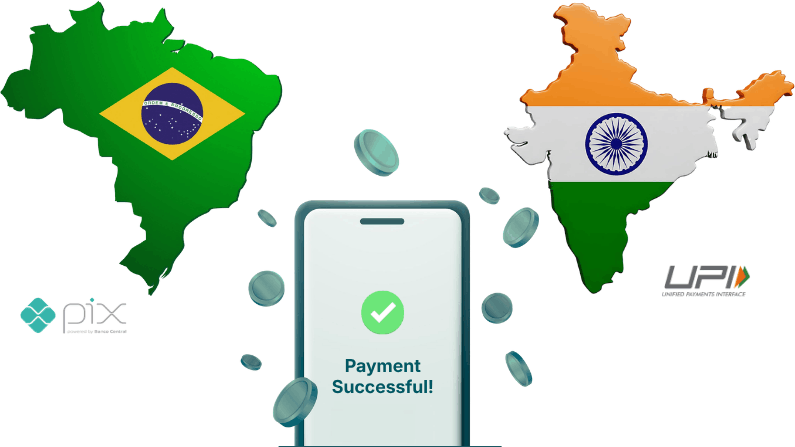
Brazil and India are towering examples that showcase the presence and activation of instant payment infrastructure to boost payment solutions. The highlight in these regions is the adoption of domestic sources and global destinations. The interconnection and export of payment solutions are done at extraordinary rates to boost the value of multi-purpose payment platforms in this region.
Pix continues to dominate the instant payment network in Brazil, with heightened use cases reported for P2P transfers. For physical retail services and recurring payment solutions, Brazil’s instant payments domain is progressing with active and efficient support.
UPI in India is now widely accepted, adding to the charm of the country’s international fintech strategy. UPI merchant acceptance is also a significant resource in this sector, owing to the dynamic acceptance of cross-border transfers. NPCI reports that August 2026 showcased the processing of 24.5 billion transactions by improved scalability and support.
Middle East: Momentum Across the GCC
GCC is currently playing a top-notch model in the instant payments category, with optimum assistance offered to domestic payment infrastructure. The market is powered by compatible solutions and connectivity offered to regions like Saudi Arabia and the UAE.
Saudi’s SARIE is open to providing 24/7 real-time transfers between domestic banking systems. This system reflects the growing connection between fraud prevention and instant payment infrastructure. In Saudi Arabia, modern fintech systems with API-ready connectivity and ISO 20022-compatible structures apply.
For the UAE, incorporating transaction support with the addition of domestic bank solutions can help. The payment opportunities in the region are directly tied to the consumer requirements index. Functionalities for the near future include instant direct debit and end-to-end digital checks, with coverage of all merchant payment capabilities.
Paywint Perspective: Exploring the Cross-Border Infrastructure
For an entity like Paywint, the biggest infrastructural model shift involves factors related to speed, compliance, transparency, and predictable settlement. The strategic theme of payment orchestration is subtly covered in this category. Opportunities are splendid for transaction mechanisms that follow this model.
Automated support can be provided for determining appropriate rails, routes, FX paths, settlement mechanisms, and other structures within the fintech model by allowing a secure monitoring channel. This becomes key to leveraging the cross-border infrastructure needed for fintech services. Paywint can support this category widely with the unique addition of its customer-friendly products and modules.
Wrapping Up: The Future of Instant Payments is Global
With the level of cross-border connectivity expressed by top fintech systems such as Paywint and other ecosystem players, the future looks bright. Liquidity standards, compliance terms, fraud prevention, and interoperability can all grow exclusively with the appropriate integration of instant payment solutions. The next phase will concentrate on delivering a system that can ensure the optimum use of real-time payments to build quality solutions throughout the fintech machine.