
The Scope of Payments Growth in the Middle East
Considering the fast-growing nature of real-time digital payments in the Middle East, the fintech ecosystem can move forward by syncing with the incoming solutions and services. Some of the key growth drivers to cover in the section are Government mandates, real-time settlement infrastructure, frictionless mobile applications, and the installation of alternative finance operations. Some emerging opportunities for Middle East payment support coverage include cross-border efficiency techniques, open banking initiatives, and tourism integration schemes and prospects. With the real-time payments boom in the region surpassing USD 275 billion, future growth opportunities are numerous.Regulations and Licensing Required for Marketing Growth
The growth of the fintech sector depends a lot on quality adherence to compliance norms and regulatory policies. The restrictions guideline could be feasibly considered for different segments, such as branding, communication, workflow outreach, and professional rule generation related to fintech. From a marketing perspective, regulations and licensing work better while accommodating the scope for optimum quality assurance and control measures. Strategic business growth is directly connected to this model, enabling industry-specific licensing requirements.
An Overview of AML, KYC, and KYB in Payments Infrastructure
Ask any expert to name the core compliance pillars to assist with fintech growth, and the names will cover AML, KYC, and KYB integrations. The structure stays the same for payments infrastructure solutions in the Middle East region, too. As usual, Anti-Money Laundering (AML) is the most significant option. KYC and KYB services are tied into the customer management and onboarding experience sections of fintech operating systems. From the Middle East payments ecosystem perspective, risk assessment, verification, and continuous monitoring are necessary to ensure the best operations support. Reliability is a core factor in this regard to enhance the options and opportunities for payment-related activities.
Cross-Border Payments and Compliance Support
The cross-border transactions model in the Middle East also deserves credit for building an enhanced fintech environment and payments system. This niche should also be open to dynamic and concrete compliance management measures to deliver an optimum experience for the associated partners.
Regional payment systems and local rail initiatives like AFAQ, BUNA, and Aani network should be taken into consideration in this category. Added to that, critical compliance necessities related to the borderless operations of the Middle East countries are also of utmost importance. These involve ISO 20022 standards, financial screening actions, utilization of sanctions monitoring, and alignment with the taxation framework and FX control.
Checklist for Businesses Promoting Payments in the Region
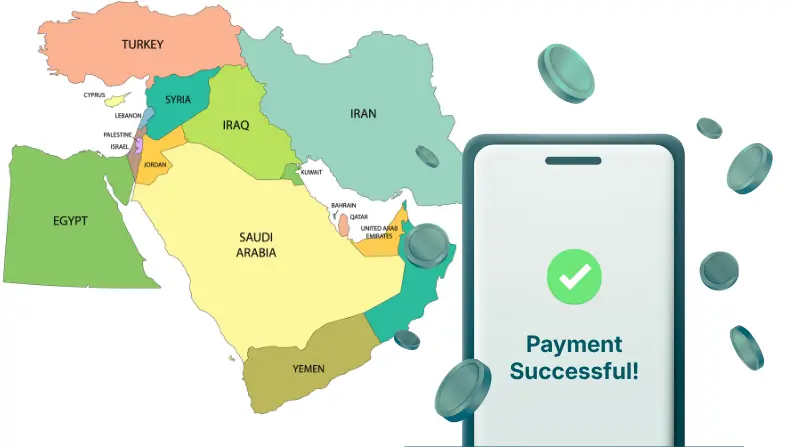
While promoting and setting up digital payment solutions in the Middle East, the biggest challenge for businesses is to build and manage a distinct regulatory framework. Validation of local licensing is a key parameter with options for data privacy and confidentiality. Choosing and facilitating payments with regulated gateways and wallets are capable of creating the best security standards and technical integrations.
A practical compliance checklist for businesses operating in the payments domain in the Middle East includes beneficiary support, monitoring control, protocol implementation, audit trails, transparent reporting functions, centralized transaction reporting, real-time fraud detection, global standards for real-time regulations, and integrated payment infrastructure assistance.
How Paywint Can Add to the Compliance Strategy & Growth
Paywint is the one-stop solution that can effectively enable all payment management tasks and collaboration efforts for the Middle East region without fail. It can assist global compliance teams in running relevant checks on the platform by catering to the region’s custom necessities. Paywint’s idea of building a core compliance strategy model and using the model for optimum growth is beyond comparison. The portal owes this to the level of optimization available from a business-friendly viewpoint.
Frequently Asked Questions
What are the main payment compliance requirements for businesses operating in the Middle East?
Payment compliance in the Middle East commonly involves payment licensing, AML and KYC controls, sanctions screening, customer due diligence, transaction monitoring, and country-specific regulatory requirements that vary across GCC markets. Paywint helps businesses build scalable cross-border payment operations while accounting for local payment infrastructure, compliance requirements, and regulated partner relationships.
Do businesses need a payment license to operate in the UAE or Saudi Arabia?
Whether a business needs a payment license in the UAE or Saudi Arabia depends on the payment activities it performs, with services such as money remittance, payment processing, merchant acquiring, and other regulated payment services potentially falling within local licensing frameworks. Paywint enables businesses to approach Middle East payment expansion with a model that considers licensing requirements, cross-border payment capabilities, and appropriate regulated payment partnerships.
How do AML and KYC requirements affect cross-border payments in the Middle East?
AML, KYC, KYB, sanctions screening, beneficial ownership verification, and transaction monitoring are essential components of compliant cross-border payments because regulators expect financial institutions and payment providers to identify customers and manage money-laundering and financial-crime risks. Paywint supports businesses in building cross-border payment workflows in which compliance, customer verification, payment processing, and international settlement work together more efficiently.
How can businesses expand cross-border payments across the GCC while staying compliant?
Businesses expanding payments across the GCC should assess each market's payment regulations, licensing requirements, AML/KYC obligations, local payment rails, currencies, settlement models, and banking or payment-partner requirements instead of treating the Middle East as one regulatory market. Paywint helps businesses develop scalable Middle East payment capabilities by connecting cross-border payment infrastructure with the local and regulatory considerations needed for sustainable regional growth.
Comparison Table
Middle East Payment Regulation: Comparing Key GCC Markets
| Market | Payment Licensing | Key Compliance |
|---|---|---|
| Saudi Arabia | Regulated by Saudi Central Bank (SAMA) | SAMA, AML, KYC, cross-border operations, and payments scope. |
| UAE | Authorized by the Central Bank of the UAE (CBUAE) | AML/KYC, sanctions screening, transaction monitoring, and customer protection. |
| Qatar | Authorization from the Qatar Central Bank (QCB) | KYC/AML, technology infrastructure, outsourcing, and system requirements. |
| Bahrain | Regulated by the Central Bank of Bahrain (CBB) | AML obligations, CBB licensing, financial-crime controls, and governance rules. |
| Regional GCC Expansion | No single GCC-wide payment license | AML/KYC, sanctions screening, local licensing and payment rails, and regulated partners. |