
You can drive data and actionable insights from digital payments to enable decision-making and efficiency. Digital payments trends will play a focused role in building business models and their financial operations. Read on to learn about the trends in the niche that will define business objectives for the near future.
What Is Driving Digital Payment Innovation in 2026?
2026 will be the year that changes the overall model of digital payments and its use cases for businesses. Compliance will not be just about sticking to regulatory norms and measures. Innovation and distinction in service will also be crucial in determining the security standards of an organization’s monetary transactions.
Likewise, the payments industry is going to see a rise in technology. Forecasts from fintech giants predict an 8% increase in digital payments value for the next 5 years. The infrastructure has changed, patterns are different now in analyzing fraud models, and the strategic placement of secure authentication is changing the payment architecture.
Top Digital Payments Trends in 2026
Have a look at the top trends in digital payments that will shape your year:
1. AI-Powered Fraud Detection and Risk Management
Fraud surge and malice can be tackled with the right prevention and detection methods. AI-powered fraud detection will rise, paving the way for effective risk management in companies. Here, AI algorithms empower the system to analyze and evaluate all transactional data with a real-time monitoring and scoring engine.
The model follows a high-value fraud management system with the inclusion of advanced settings. It could even help you to manage sophisticated fraud models and recover from high risks.
2. Embedded Finance Expansion
The embedded finance profile is going to see a massive expansion, reflecting on categories like virtual cards, in-app purchases, and modern lending options like BNPL (Buy Now, Pay Later).
B2B acceleration is possible with credible embedded finance solutions. These can drive the value of SaaS providers and businesses that integrate with different payment sources. A business can increase its customers’ lifetime value with this function.
3. Real-Time and Cross-Border Payments
Real-Time Payments (RTPs) and cross-border payments are redefining the domain of digital payments for businesses. These payment types enable international fund transfers within seconds and minutes. 24/7/365 is the highlight of this growing digital payments category.
AML/KYC processes, data privacy laws like HIPAA, GDPR, and Foreign Exchange (FX) controls are considered in this model. Adherence to international tax laws like VAT will also be under consideration. Digital wallets in the domain are increasingly adopting cross-border payment support with strict observation of guided policies.
4. Payment Orchestration and Intelligent Routing
Gone are the days when you have to juggle between different payment methods. At present, fintech operators provide an all-in-one centralized platform to work with multiple payment gateways and solutions. This won’t compromise the cost-effectiveness or reliability of instant business payments.
Some of the major components that add strategic value in payment orchestration are intelligent routing with real-time optimization and failover handling, cost reduction, centralized control, and enhanced security.
5. Biometric Authentication
You already know about different types of biometric authentication in payments. The domain will exhibit the introduction of new features to the category, beneficial for wider applications, without straying away from the ethical considerations.
Multimodal systems will evolve in the domain, with a fundamental scope supported by smart detection and behavioral technology. Industry applications will include the use of blockchain features, edge computing, and well-defined user privacy objectives.
6. API-First Payment Infrastructure
In this payment infrastructure model, API will be treated as a product that delivers faster time-to-market for businesses, scope for scalability, and seamless operational efficiency. Security and data privacy will not be compromised in such models, simplifying payment processing for higher industry impact.
Fully globalized entities will be converted into regional and instant payment systems, reducing transaction costs, speeding up payment settlements, and boosting the overall user experience.
7. Subscription and Recurring Payment Optimization
Optimization will be impactfully applied in the subscriptions and recurring payments section, clearing the way for flexible payment options. Digital payment failure retries will be set up with automated tactics, and advanced analytics will be churned out from performance indicators with refined strategies.
Digital payments best practices with clear policies and technology leverage functions are accommodated in this trend. Authorization rates will also be optimized to improve the success rates by offering quality communication filters and trusted revenue management.
How to Choose a Future-Ready Digital Payments Platform
Trends in digital payments will have a direct impact on businesses and their payment processing structure. Some of the main values that fintech operators and providers should manage in this section involve scalability with modern architecture, priority for tokenization in compliance, and integration of diverse and flexible payments.
Businesses should look out for platforms with insight-backed dashboards and transparent pricing support. Cash flow monitoring and customer analysis reports should be instantly and directly available for businesses to use and manage.
The right fintech provider in digital payments showcases detailed demo decks, responsive customer support, quality expertise, and authentic contracts.
In A Nutshell
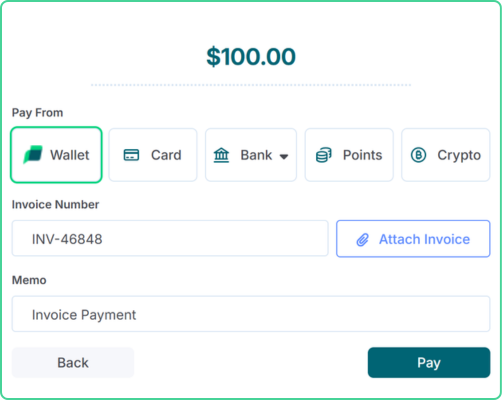
This is where Paywint digital payment solutions come into the mix. Paywint stays up-to-date with the digital payments trends and offers a chance for businesses seeking these services gel well with the fintech ecosystem. Paywint offers a simple digital payment process, with hassle-free payouts and effortless monetary transactions.
Frequently Asked Questions
What is digital payment?
A digital payment is an electronic transaction to transfer money. Digital payments include credit and debit card payments, mobile wallets, bank transfers, UPI, real-time payments, online payment gateways, and contactless payments. Paywint is a proven digital payments platform that facilitates money transfers via same-day ACH, RTP, FedNow, wire, virtual cards, push-to-card, checks, and crypto services.
What are the most popular digital payment solutions used today?
The most popular digital payment solutions in 2026 include digital wallets (Paywint, Apple Pay, Google Pay, PayPal), real-time payment systems (RTP, UPI, Faster Payments), credit and debit cards, Buy Now Pay Later (BNPL) services, mobile banking apps, contactless payments (NFC), and cross-border payment platforms. Businesses also use payment gateways, API-based payment processors, and embedded finance solutions to enable secure, instant, and scalable online transactions.
How can businesses use digital payment services and systems?
Digital payment services and systems enable secure online transactions, instant fund transfers, cross-border payments, mobile payments, and contactless checkout experiences for businesses worldwide. A business can connect and collaborate with Paywint to send, receive, and process electronic payments securely.
Digital Payments Comparison Table
| Digital Payment Method | Use Cases | Cost |
|---|---|---|
| Digital Wallets | E-commerce, mobile payments, retail | Moderate |
| Credit & Debit Cards | Online & offline businesses | Moderate–High |
| Real-Time Payments | Instant bank transfers, B2B & P2P | Low–Moderate |
| Payment Gateways | SaaS, online businesses | Setup + Transaction Fees |
| BNPL | Retail, eCommerce | Merchant Service Fees |
| Cross-Border Payments | International businesses | FX + Transfer Fees |
| Bank Transfers | B2B, subscriptions | Low |
| Embedded Finance | SaaS, marketplaces | Platform-Based Pricing |