
Overview & Meaning of Compliance in Payments
Since techniques such as fraud prevention, data management, customer trust, and systematic growth are necessary to fulfill the monetary side of a business with ease, compliance in payments should be given great relevance. The value associated with this should be considered from a payments infrastructure perspective, with quality measures added to the business model. The core goals that enhance the payments model of a business include fraud prevention, data protection, and customer trust-building techniques. KYC and AML policies, PCI DSS verifications, regional payment policies, and guidelines from trusted banks are capable elements in this framework. Inside the defined framework of payments compliance, secure and legal digital transactions are necessary to elevate the cross-border settlements and instant transactions space. The fact is businesses cannot work effectively in the modern payments space without adapting to the real-time settlement phase within the transactions flow.
Core Components of Modern Compliance Framework to Tackle Payment Complexities
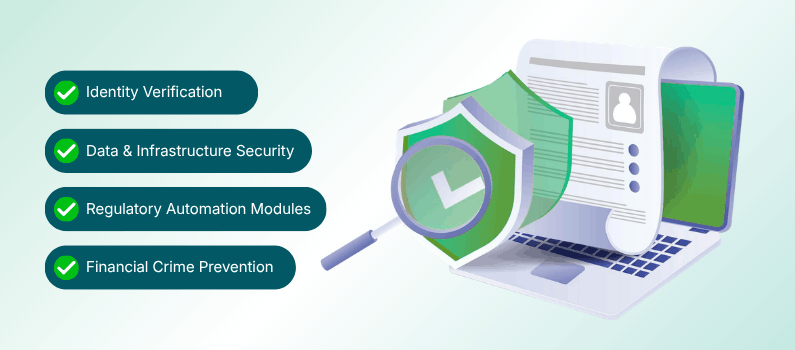
The main components that constitute a top-notch compliance framework to streamline and optimize the payment functions are: Identity Verification The biggest and most important compliance components are in identity verification models. Know Your Customer (KYC) and Know Your Business (KYB) are prominent segments under this, while other main options include OFAC or FATF for sanctions screening purposes. Similarly, cross-border transaction models are also part of this category. Data & Infrastructure Security The items coming under this category include options like PCI DSS compliance, tokenization, and Strong Customer Authentication (SCA). Features such as end-to-end encryption capabilities and compliance-backed data regulations are part of this model. Adhering to standards such as GDPR is a possible option in this regard.
Regulatory Automation Modules This involves the automated scanning of performance modules to understand and analyze policies and laws related to governance of compliance authorities. Centralized Governance, Risk, and Compliance (GRC) platforms are directly covered here to aid in strategic audit report generation and evaluation. Financial Crime Prevention Real-time transaction monitoring services in this category deal with the management of financial crime and risk assessment, with the inclusion of appropriate compliance solutions. AML policies and supervision come under this category. Due diligence checks will always be active in this scenario, with options to deal with compliance mandates and acts.
Complexities & Mistakes Associated with Common Compliance Objectives
The key complexities that payment solutions should observe to promote a fixed regulatory environment are as follows:
- Constant shift in conditions – Rules and policies are constantly changing, causing the authorities to deal with the shift in conditions.
- Third-party support issues – Ecosystems with hidden liabilities might act as third-party partners, creating a rift in meeting the functional operations standards.
- Lack of workflow support – The workflow associated with compliance in payments should be streamlined to allow a seamless flow, which is not always the case.
- Overload of data records – Safety and confidentiality could be a challenge when the existing data records are larger than the manageable infrastructure.
- Overdependence on tools – When more tools or platform resources are involved, compliance may take a different route than practical application tactics.
- Insufficient documentation – Poor documentation and audit support might create problems in delivering a foolproof compliance model for organizations.
- Ineffective handling of resources – It could pave the way for cultural isolation, where compliance is different from the HR and business units of a firm.
Technology & Scope of Future Payments with Compliance Integrations
The future of payments follows a standardized format with clarity in organizational framework. Core payment technologies already adopt and follow a system that accommodates the best practices in real-time rails, ISO 20022 standards, and dynamic provider orchestration networks. With the advent of compliance and regtech solutions added to the mix in a qualified proportion, payment services can get to their optimum level.Real-time screening, consolidated payment support, trust-based security metrics, cloud-oriented solutions, and scalability functions all play a part in this format. Interoperability will become more functional to carve a clear path for modern payment solutions.
Wrapping Up: How Paywint Can Contribute
A platform like Paywint can enormously contribute to the digital payments space with optimum support offered to compliance norms and verification. Being a dynamic business unit in the fintech ecosystem, Paywint is capable of providing custom solutions to each partner and provider. The company leads the space with ideal contributions offered in risk assessment strategies, sanctions screening, enhanced assistance to target customer market, etc.
Frequently Asked Questions
What is payment compliance and why is it important?
Payment compliance is the process of meeting regulatory, security, and operational requirements that help protect payment systems from fraud, financial crime, data breaches, and legal risks. Paywint helps businesses strengthen their payment compliance framework with secure payment solutions designed to support AML, KYC/KYB, fraud prevention, and regulatory best practices.
What are the key components of a payment compliance programme?
A comprehensive payment compliance programme typically includes AML controls, KYC and KYB verification, fraud monitoring, sanctions screening, chargeback management, data security, privacy protection, and third-party risk management. Paywint supports businesses with payment infrastructure that aligns with these core compliance requirements while helping improve operational security and customer trust.
How can businesses reduce payment fraud while staying compliant?
Businesses can reduce payment fraud by implementing strong customer verification, real-time transaction monitoring, risk-based authentication, sanctions screening, and continuous compliance monitoring. Paywint enables organisations to build a more secure payment ecosystem by supporting modern fraud prevention and compliance practices across the payment lifecycle.
Why is payment compliance becoming a competitive advantage?
Strong payment compliance helps businesses earn customer trust, strengthen banking and partner relationships, reduce financial crime risks, and scale with greater confidence in an increasingly regulated payments industry. Paywint combines secure payment technology with a compliance-focused approach to help businesses build resilient payment operations that support sustainable growth.
| Area of Compliance | Basic Compliance Feature | Modern Compliance Framework |
|---|---|---|
| AML Monitoring | Manual checks and limited supervision | Follows continuous risk assessment and transaction monitoring |
| OFAC & Sanctions Screening | Manual screening in regular intervals | Continuous screening with integrated workflows |
| Chargebacks & Disputes | Reactive handling with minimal evidence | Proactive handling with structured tracking and fraud prevention measures |
| Third-Party Policies | Lack of optimum review in vendor selection | Dedicated due diligence for partners and providers |